
Your home’s siding does more than improve curb appeal. It helps protect your home from rain, wind, and other outdoor conditions. But after years of exposure to Iowa’s changing weather, even durable siding materials can begin to show signs of wear.
So, how do you know when it’s time to replace your siding?
The answer depends on the type of siding you have, its condition, and whether the damage is isolated or widespread. Some problems can be addressed with relatively simple repairs, while others may indicate it’s time to consider siding replacement.
Here are the warning signs to watch for, what they might mean, and when it’s worth having a professional take a closer look.
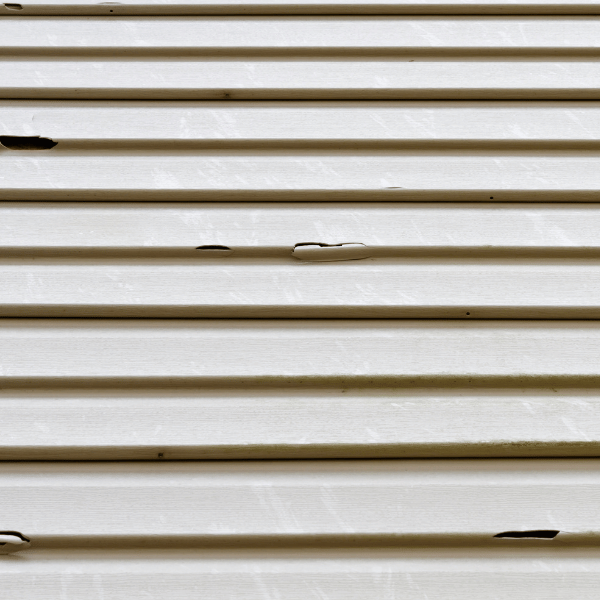
Cracks, holes, and missing panels are among the most noticeable signs of siding damage. Iowa’s hailstorms, strong winds, and temperature changes can all contribute to problems with exterior materials.
A single damaged panel may be repairable or replaceable without re-siding the entire house. However, widespread cracking, repeated damage, or siding that has become brittle may indicate that a larger replacement project makes more sense.
What to look for: Cracks, impact damage, missing sections, or panels that no longer fit together properly.
Siding should generally appear straight, secure, and properly aligned. Panels that bow, buckle, or pull away from the house deserve closer attention.
These problems can develop for several reasons, including improper installation, heat exposure, material deterioration, or issues with the underlying wall.
For example, vinyl siding naturally expands and contracts as temperatures change. Proper installation allows for that movement. When the material is fastened incorrectly or lacks sufficient clearance, it may buckle or become distorted.
What to look for: Wavy sections, bowed panels, loose edges, or siding that appears to be separating from adjacent pieces.
Moisture is one of the more important concerns when evaluating aging siding.
Siding is part of a larger exterior wall system designed to manage water. When siding, flashing, or other protective components are damaged or improperly installed, moisture may reach areas where it shouldn’t.
Potential warning signs include soft or deteriorating wood, persistent dampness, staining around windows or doors, or areas where siding appears swollen or damaged.
Peeling interior paint or unexplained moisture stains may also deserve investigation, although these symptoms don’t necessarily mean the siding is responsible.
What to look for: Soft spots, rot, suspicious staining, swollen materials, or recurring moisture problems.
If you suspect water is getting behind your siding, it’s best to address the issue promptly. Simply covering damaged materials with new siding may leave an underlying moisture problem unresolved.
Sun exposure can gradually change the color of exterior siding, particularly on portions of the home that receive direct sunlight throughout the day.
However, fading alone doesn’t necessarily mean the siding has failed.
If the material is still structurally sound, discoloration may be primarily a cosmetic concern. Depending on the siding type, cleaning, refinishing, or other maintenance may improve its appearance.
Replacement becomes a more practical consideration when fading is accompanied by brittleness, extensive damage, or a desire to update the home’s exterior.
What to look for: Uneven color, chalky surfaces, or noticeable fading, especially when other signs of deterioration are present.
Green or dark discoloration on siding isn’t always a sign of serious damage. Algae, mildew, and other surface growth can develop where moisture and shade are common.
In many cases, exterior buildup can be cleaned using methods appropriate for the siding material.
However, recurring growth in the same location, persistent dampness, or evidence of damage beneath the siding may indicate that further evaluation is needed.
What to look for: Growth that repeatedly returns, wet areas that don’t dry normally, or discoloration accompanied by soft or damaged materials.
An occasional repair doesn’t necessarily justify replacing all the siding on your home. But when repairs become more frequent or involve multiple areas, it’s worth considering the bigger picture.
For example, replacing one storm-damaged panel may be straightforward. Repeatedly repairing cracked, loose, or deteriorating siding across several walls may become less practical over time.
Consider the siding’s overall condition, the availability of matching materials, and the anticipated cost of future repairs.
What to look for: Repeated repair needs, widespread damage, or difficulty finding replacement materials that match existing siding.
If your home feels draftier than usual or heating and cooling costs have increased, it’s understandable to wonder whether your siding is contributing to the problem.
However, siding isn’t necessarily the cause.
Air leakage, inadequate insulation, aging windows, and other issues can affect comfort and energy efficiency.
If you’re considering siding replacement, it may be a good opportunity to have the underlying wall system evaluated and discuss whether additional insulation or air-sealing improvements would be beneficial.
What to look for: Drafty rooms, noticeable comfort differences, or energy costs that warrant a broader evaluation of your home’s exterior.
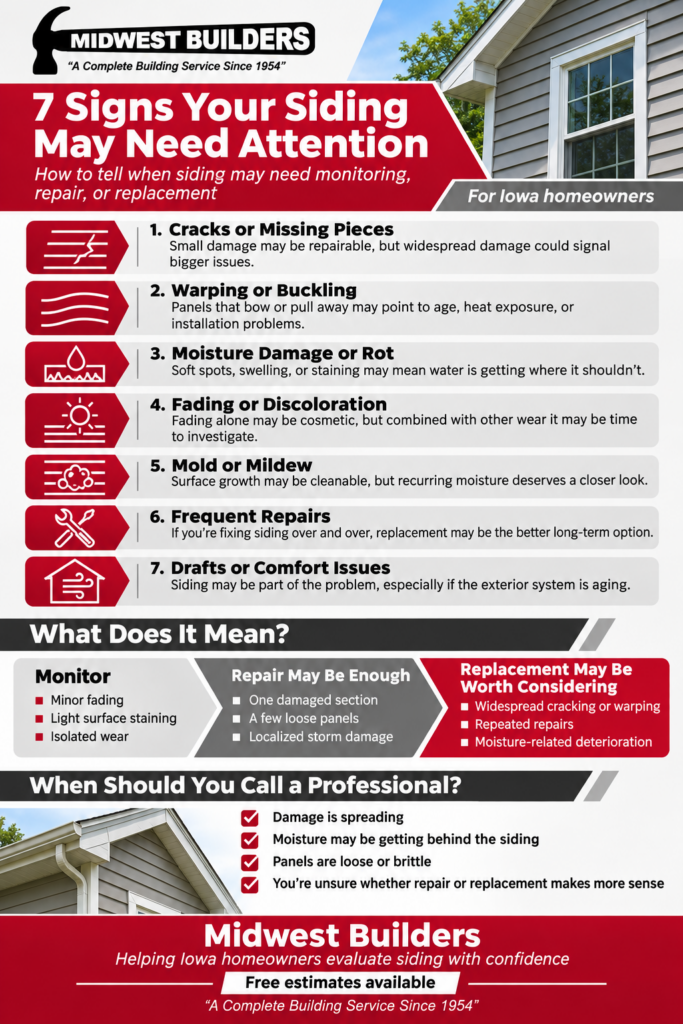
Not every siding problem requires a complete replacement. The right approach depends on the extent of damage, the type of material, and the condition of the underlying structure.
Siding repair may be a reasonable option when:
Siding replacement may make more sense when:
A professional assessment can help determine whether targeted repairs are sufficient or whether replacement offers better long-term value.
One common question homeowners ask is whether siding installation should be scheduled for a particular season.
While moderate temperatures and dry weather can make installation more convenient, there isn’t one season that’s automatically right for every siding project.
Spring and summer are common times for exterior improvements, but rainy conditions, excessive heat, or severe storms can affect scheduling.
Fall can offer comfortable working temperatures, making it an attractive time to plan a siding project. However, it’s not the only suitable season.
Winter installation may also be possible, depending on the siding material, temperature, weather conditions, and manufacturer’s installation requirements. Some products require additional handling precautions or adjustments in cold weather.
For vinyl siding in particular, installers must account for expansion and contraction throughout the year. Proper installation techniques matter more than choosing a particular month.
The best time to replace siding is when the project can be completed safely, under suitable conditions, and according to the manufacturer’s specifications.
If your siding is already damaged or allowing water to reach vulnerable areas, don’t delay an assessment simply because it’s not fall.
There’s no universal replacement schedule that applies to every home.
Siding lifespan varies based on the material, installation quality, exposure to weather, maintenance, and other factors.
Some homeowners may need to replace siding earlier because of storm damage or installation problems, while others may have siding that remains serviceable for decades.
Rather than replacing siding based on age alone, consider its current condition.
Routine visual checks, especially after major storms and seasonal weather changes, can help identify problems before they become more extensive.
Often, yes. If damage is localized and compatible replacement materials are available, individual panels or sections may be repairable or replaceable. The condition of the surrounding siding and any underlying damage should be considered.
Not necessarily. Fading may be primarily cosmetic. If the siding remains sound and continues to perform as intended, replacement may be optional rather than necessary.
Sometimes. Winter installation depends on weather conditions, material requirements, and the installation methods being used. A qualified contractor can determine whether conditions are appropriate for the particular project.
Not automatically. While certain siding projects may create opportunities for insulation and air-sealing improvements, energy savings depend on the materials installed and the existing condition of the home.
Iowa homeowners deal with a wide range of weather conditions, from summer heat and severe storms to freezing winter temperatures. Over time, those conditions can affect the appearance and performance of exterior siding.
The important thing is recognizing when damage deserves attention and understanding whether repair or replacement is the better solution.
Since 1954, Midwest Builders has served homeowners in the Greater Des Moines area with residential construction and exterior improvement services, including siding installation.
If you’re noticing cracks, loose panels, or other signs of deterioration, our team can help you explore your siding options and plan your next steps.
Learn more about our siding installation services or contact Midwest Builders to request a free estimate.
Call 515-289-0100 to get started.
